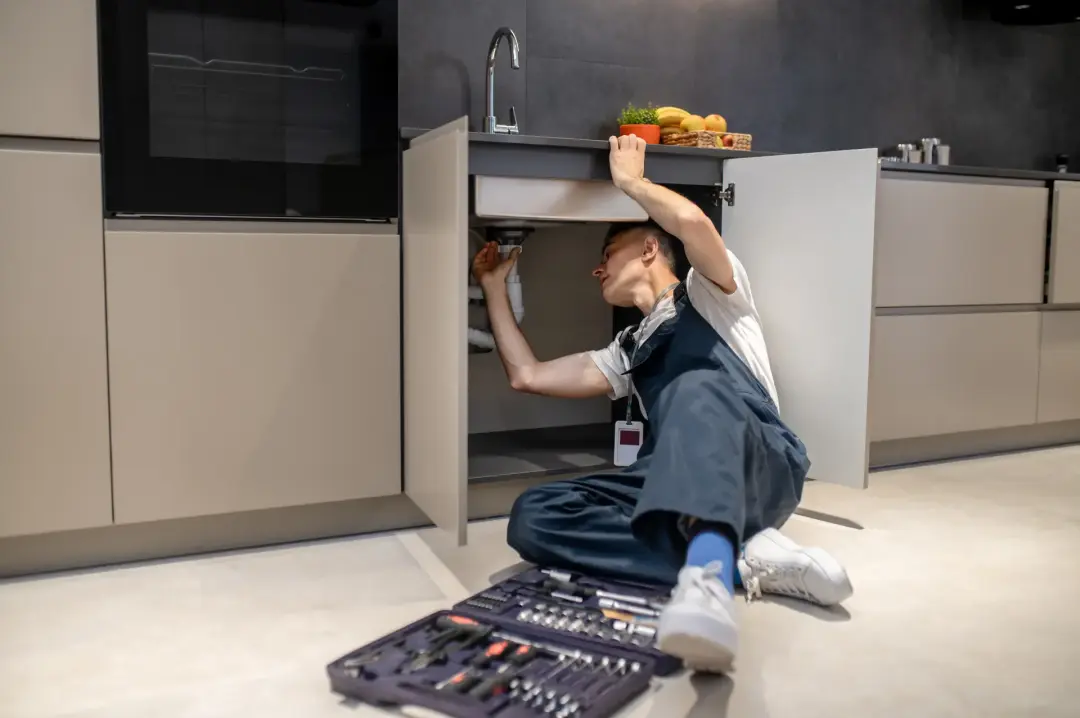
Before an emergency plumber arrives, your priorities are people, safe control of the water and clear information. You do not need to diagnose the failed part or attempt a permanent repair while waiting.
This guide gives households in Cannock a practical sequence for a sudden leak or plumbing failure. Skip any step that puts you at risk, and explain what you could and could not safely do when you speak to the plumber.
First, check whether it is safe to stay in the area
Move children, pets and anyone who needs assistance away from the affected room. Look from a safe position for wet electrical equipment, contaminated water and a sagging or bulging ceiling. Avoid walking through floodwater to investigate. A plumbing emergency can become an electrical or structural hazard before its source is obvious.
If there is a gas smell, leave for a safe place, avoid flames and electrical switches, and call the National Gas Emergency Service on 0800 111 999 for a mains-gas emergency. For LPG, contact the supplier’s emergency service. Do not wait for a plumbing appointment. HSE’s domestic gas guidance explains the emergency response and the need for competent Gas Safe registered engineers.
A carbon monoxide alarm or suspected poisoning also needs immediate action: leave the property and seek emergency assistance, including urgent medical help where someone is unwell. Do not re-enter to collect belongings or search for a leak. If there is immediate danger to life, call 999.
Stop the water only when you can reach the valve safely
For a leaking tap or appliance, a known local isolation valve may stop water to that fitting without shutting down the whole home. If the source is uncertain or water continues escaping, the internal stop tap may be needed. Use only a valve you recognise and can access from a dry, safe position.
Turn a traditional internal stop tap gently clockwise to close it. Other controls operate differently, so follow their instructions. Do not force a seized valve, dismantle it or use extra leverage. Tell the plumber if it will not turn or if water continues flowing after you believe the supply is isolated.
Avoid operating street-side or shared valves yourself. A flat or shared building may have arrangements that affect other occupants. Contact the building manager or water supplier where appropriate and make clear that the water is not yet controlled. Accurate information is better than reporting a successful shut-off you cannot confirm.

Treat wet electrics as a separate professional problem
Do not touch a wet socket, light switch, appliance or consumer unit. Do not use a plug-in vacuum, fan or extension lead near the leak. Turning electricity off is appropriate only when the switch can be reached and operated safely without approaching water or damaged equipment.
Electrical Safety First advises leaving a wet or damaged fuse box alone and having affected electrical systems checked by a registered electrician before use. Stopping the plumbing leak does not establish that the electrics are safe to switch back on.
Tell the plumber that electrical fittings may be affected, including which rooms are involved. If you have safely isolated electricity, say so. Keep others from restoring power simply because the dripping appears to have stopped. The plumbing repair and electrical assessment may require different professionals.
Limit damage without entering an unsafe space
Once the area is safe and water is controlled, move accessible belongings away from the wet zone. A bucket can catch a remaining drip and towels may protect a small, dry-floor edge. These are short-term measures. Keep enough room to move safely and check containers without repeatedly entering a hazardous area.
Do not stand below a water-filled ceiling, puncture it or remove ceiling panels. Do not lift heavy wet flooring or attempt to dry out electrical equipment yourself. Water that has entered building materials may need further assessment even after the leak has been repaired.
Aviva’s July 2026 analysis of its home insurance claims put the average escape-of-water claim at £8,595. It also reported that 25% occurred in July to September. These are Aviva’s figures, not a national repair-price guide; they underline that water damage can be serious in any season.
Stop using fixtures connected to a drainage backup
If wastewater is returning through a toilet, bath or shower, stop flushing and running nearby taps or appliances. Adding water can worsen the overflow. Keep the affected room out of use and prevent contact with sewage. A blocked waste system is not normally solved by shutting the incoming water alone.
Do not add a drain-cleaning product while waiting, especially if another product is already present. Keep the packaging and tell the plumber what was used and approximately when. This helps them assess the risks before opening traps or working on the blockage.
If several homes or an outside shared drain are affected, report the situation to the relevant sewerage company as well. Explain whether sewage is inside the home or contained outside. Do not lift heavy drain covers or enter a drain to find out who owns the pipe; that investigation belongs with the appropriate professionals.
Give the emergency plumber a concise, factual briefing
Start with your location and contact number, then describe what is happening now: active spray, a slow drip after isolation, no usable toilet, or wastewater backing up. Say when it started, what has been shut off and whether gas, electricity or ceiling damage may be involved. Ask about current availability and the expected arrival arrangements.
Photographs can help when they can be taken without risk. Include a wider view of the fixture and a closer view of any accessible fitting. Do not remove panels or crawl into a wet cupboard to obtain a better image. A useful description is enough when photography is unsafe.
Ask for the call-out and charging basis, what the initial visit covers and how further work will be agreed. If a landlord, managing agent or insurer needs to authorise work, make that contact promptly. Do not let administrative uncertainty keep people in a dangerous room or delay emergency-service assistance.
Prepare access, records and the next decision
Clear a dry route to the work area and known shut-off controls where safe. Arrange for someone to meet the plumber, move pets away and explain parking or entry restrictions. Keep any appliance information, previous repair invoice or relevant photograph nearby rather than searching for it while the visit is underway.
Document damage from a safe position and contact your insurer if appropriate. Keep receipts and follow the insurer’s instructions about evidence and damaged items. Policy cover and responsibility for repairs vary, so do not assume that arranging a plumber means every associated cost will be reimbursed.
Before the plumber leaves, ask what has been repaired, whether any temporary measure remains and what further work is needed. Confirm which fixtures can be used again and whether another trade must assess damage. A controlled leak is the first milestone; a safe return to normal use may require additional checks.
Summary and next step
While waiting, protect people, isolate water only when safe and prepare a clear account of the fault. Contact Albatross UK LTD about emergency plumbing help in Cannock and ask about availability; gas or immediate safety hazards require the appropriate emergency service first.